Low Water Pressure: Causes and How to Fix It
Low water pressure can be caused by a problem with the mains supply, a partially closed stopcock, leaking pipes, or limescale buildup. Here is how to diagnose and fix it.
Check the basics first
Before calling a plumber, check that your internal stopcock is fully open - if it is even slightly closed it will restrict flow. Check with your neighbours to see if they have the same problem - if they do, it is a mains supply issue and you need to contact your water company.
Common causes of low pressure
- A partially closed stopcock - the most common and easiest to fix
- Leaking pipes - even a small drip in a hidden pipe will reduce pressure
- Limescale buildup inside pipes narrows the bore and restricts flow, especially in hard water areas like Surrey
- Old lead or galvanised pipes corrode internally and lose capacity over time
Low pressure in one tap or shower
If the pressure is fine elsewhere but poor at one outlet, the problem is local. The tap aerator or shower head may be clogged with limescale - unscrew it and soak it in white vinegar overnight. The isolation valve for that fitting may also be partially closed.
Low pressure throughout the house
If every tap and shower is affected, the issue is either the mains supply or the internal pipework. We can measure the flow rate and static pressure at the point of entry to determine whether the problem is before or after the stopcock. If the mains pressure is fine but the internal pressure is low, a repipe or partial repipe may be needed.
Solutions we can offer
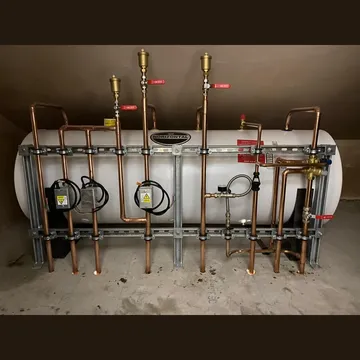
Depending on the cause, we can replace corroded pipework, fit an accumulator tank to boost mains pressure, install a whole-house pump (for gravity-fed systems), or fit a pressurised unvented cylinder for the hot water side. We will recommend the most cost-effective solution for your specific situation.
Need help with this?
Call us on 01932 943 009 or email info@hphsolutions.co.uk. We cover Surrey, Hampshire, Berkshire and London. Free quotes, no obligation.